Drivers often ask: what security devices do insurers actually care about? The honest answer is that insurers don’t all assess security in the same way, and no single device guarantees cheaper premiums. However, insurers do care about theft risk — and certain security measures are widely recognised as reducing that risk.
In practice, insurers tend to care most about security features that either prevent theft, reduce the chance of opportunistic theft, or increase the likelihood of recovery.
This guide explains which security devices insurers are most likely to value, how they fit into underwriting, and how to choose a sensible security setup without relying on myths.
What Do Insurers Mean by “Security”?
When insurers talk about vehicle security, they’re generally referring to measures that affect:
- The probability of theft (how likely a car is to be stolen)
- The cost of claims (how expensive theft or damage claims may be)
- The ability to recover the vehicle (which can reduce claim payouts)
Some security features may influence premiums for certain vehicles, while others mainly help by reducing real-world risk and supporting claims.
How Insurers Assess Vehicle Security
Insurers usually consider security in a few main ways:
- Factory-fitted security (e.g., immobilisers, alarms)
- Vehicle theft trends for the make/model
- Where the vehicle is kept (driveway, garage, on-street)
- Additional security added by the owner (varies by insurer)
Some security is “built into” the risk model automatically (like factory immobilisers), while aftermarket devices may be considered differently depending on the insurer and policy questions asked.
Security Devices Insurers Commonly Care About
Below are the security measures that insurers most commonly recognise as meaningful because they reduce theft risk or improve recovery.
1. Factory-Fitted Immobilisers and Alarms
Why insurers care
Factory systems are standardised, widely understood, and designed to prevent a vehicle being started without the correct key.
Immobilisers are a baseline security feature for many modern cars and are often assumed within insurance pricing models for newer vehicles.
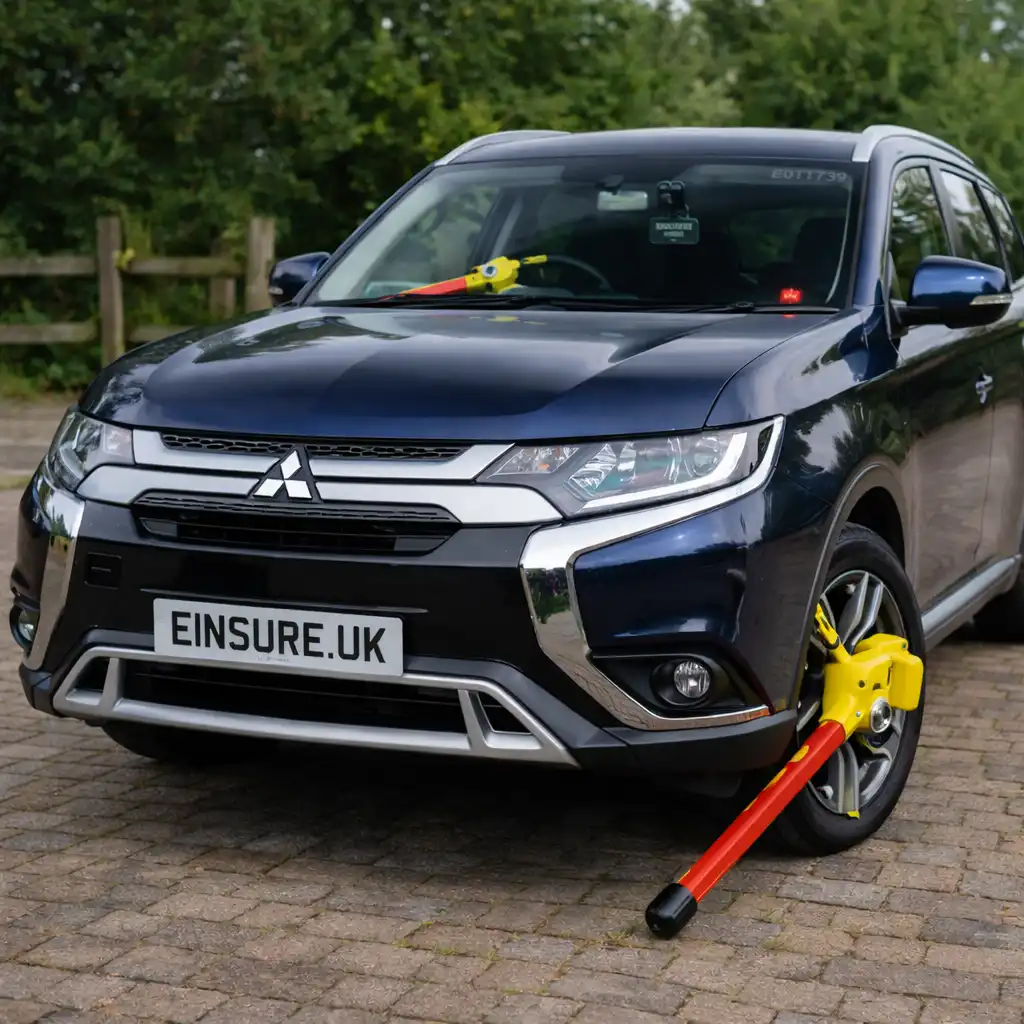
2. Visible Physical Deterrents (Steering Wheel Locks)
Why insurers care
Visible deterrents can reduce opportunistic theft by making the vehicle look more difficult to steal. Even when theft methods are electronic, criminals still consider time, noise, and attention.
Key point: A steering wheel lock won’t guarantee cheaper insurance, but it can support a lower-risk profile and reduce real-world theft exposure.
View steering wheel locks on Amazon
3. Tracking Devices (GPS Trackers)
Why insurers care
Trackers can improve recovery chances after theft. From an insurer’s perspective, successful recovery can reduce total claim costs, especially for higher-value vehicles.
Some insurers may ask about trackers for specific vehicles, but requirements vary widely by provider.
View vehicle GPS trackers on Amazon
4. Keyless Signal Protection (Faraday Pouches / Boxes)
Why insurers care
Insurers are increasingly aware of relay theft affecting keyless entry cars. While insurers don’t always price specifically for Faraday pouch use, signal-blocking can reduce theft risk for vulnerable vehicles.
These devices are most valuable in real-world protection because they reduce the chance your key signal can be relayed from inside your home.
View Faraday pouches for car keys on Amazon
5. OBD Port Protection
Why insurers care
In some theft scenarios, thieves attempt to programme new keys via the OBD port. OBD protection adds a barrier and supports a layered security approach.
Not all insurers ask about this specifically, but it can reduce risk and may be relevant for vehicles targeted by electronic theft methods.
View OBD port protectors on Amazon
Security Features That Help in Real Life (Even If Insurers Don’t Price Them Directly)
Some devices may not directly impact pricing, but can still help you manage risk and protect yourself during claims.
Dash cams
Dash cams can support insurance claims by providing evidence, especially where fault is disputed. They don’t guarantee cheaper premiums, but they can be very helpful during a claim.
View Full HD dash cams on Amazon
What’s the Best “Value” Security Setup for Most Drivers?
For many UK drivers, a sensible and practical security setup includes:
- A Faraday pouch (if you have keyless entry)
- A steering wheel lock (visible deterrent)
Then consider adding:
- OBD protection (extra layer against key programming attempts)
- A tracker (especially for higher-value cars)
This layered approach reduces reliance on any single device.
Should You Tell Your Insurer About Added Security?
It’s usually sensible to tell your insurer about security devices, especially if your insurer asks questions about them during quotation or renewal.
Keeping your details accurate helps avoid issues later if you need to make a claim.
Key Takeaways
- Insurers care most about theft risk and claim costs
- Factory immobilisers and alarms are often built into pricing models
- Trackers can help with recovery, especially for higher-value cars
- Visible deterrents (like steering wheel locks) can reduce opportunistic theft risk
- Faraday pouches and OBD protection support layered security for modern theft methods
- No device guarantees cheaper insurance
Frequently Asked Questions
What security devices do insurers care about most?
Insurers typically care most about factory-fitted immobilisers and alarms, tracking devices for higher-value vehicles, and security measures that reduce theft risk.
Do steering wheel locks reduce insurance premiums?
There is no guarantee. However, steering wheel locks can reduce theft risk and may support a lower-risk profile.
Do insurers ask about Faraday pouches?
Not always. Faraday pouches mainly help by reducing relay theft risk for keyless entry cars.
Are trackers required for insurance?
Some insurers may require a tracker for certain high-value vehicles, but it depends on the insurer and policy.
Should I tell my insurer about aftermarket security?
Yes, especially if asked during quotation or renewal. Accurate information helps prevent issues during claims.